
- IPVC
- Sobre o IPVC
- Escolas IPVC
- Serviços
- Académicos
- Administrativos e Financeiros
- Bibliotecas
- Expediente e Arquivo
- Gabinete de Avaliação e Qualidade
- Gabinete de Comunicação e Imagem
- Gabinete de Mobilidade e Cooperação Internacional
- Informática
- Recursos Humanos
- Apresentação Geral
- IPVConcilia
- Avaliação de Desempenho
- Procedimentos Concursais
- Título Especialista
- Formação Profissional
- Publicitação de Atos
- Bolsa de Recrutamento de Pessoal Docente
- Lista de Pessoal Docente
- Lista Nominativa
- Lista de Pessoal Técnico e Administrativo
- Segurança e Saúde no Trabalho
- Avaliação de Satisfação
- Documentos de Gestão de Recursos Humanos
- Documentação de Apoio
- Secretariado da Presidência
- Técnicos
- Unidade de Gestão de Projetos
- Sistema de Gestão
- Serviços de Ação Social
- Estudar
- Cursos
- Estudante IPVC
- Guia de Acolhimento
- Provedor do Estudante
- Representação da Comunidade Estudantil nos Órgãos da Instituição
- Calendário Escolar
- Propinas e Emolumentos
- Renovação de Inscrição
- Horários e Assiduidade
- Mapa de Exames
- Estatutos Especiais
- Certidões, Inscrições e Requerimentos
- Frequência de Unidades Curriculares Isoladas
- Creditação / Certificação de competências
- Suplemento ao Diploma
- Carta de Curso
- Mobilidade
- Apoio aos alunos
- Legislação e Regulamentos
- Estudante Internacional
- Candidato IPVC
- Acesso e Ingresso
- Ano Zero
- Gabinete de Acesso
- Candidaturas ao Ensino Superior
- Regimes Especiais de Acesso
- Concursos Especiais
- Maiores de 23 anos
- Diplomados de Vias Profissionalizantes
- Reingresso, Mudança de Instituição/Curso
- CTeSP
- Mestrados
- Pós-Graduações
- Frequência de Unidades Curriculares Isoladas
- Matrícula e Inscrição
- Estatutos Especiais
- Propinas e Emolumentos
- Legislação e Regulamentos
- Reconhecimento de Graus e Diplomas
- ALUMNI
- Innovation
- Investigar
- Internacional
- Viver
- IPVC
- Sobre o IPVC
- Escolas IPVC
- Serviços
- Académicos
- Administrativos e Financeiros
- Bibliotecas
- Expediente e Arquivo
- Gabinete de Avaliação e Qualidade
- Gabinete de Comunicação e Imagem
- Gabinete de Mobilidade e Cooperação Internacional
- Informática
- Recursos Humanos
- Apresentação Geral
- IPVConcilia
- Avaliação de Desempenho
- Procedimentos Concursais
- Título Especialista
- Formação Profissional
- Publicitação de Atos
- Bolsa de Recrutamento de Pessoal Docente
- Lista de Pessoal Docente
- Lista Nominativa
- Lista de Pessoal Técnico e Administrativo
- Segurança e Saúde no Trabalho
- Avaliação de Satisfação
- Documentos de Gestão de Recursos Humanos
- Documentação de Apoio
- Secretariado da Presidência
- Técnicos
- Unidade de Gestão de Projetos
- Sistema de Gestão
- Serviços de Ação Social
- Estudar
- Cursos
- Estudante IPVC
- Guia de Acolhimento
- Provedor do Estudante
- Representação da Comunidade Estudantil nos Órgãos da Instituição
- Calendário Escolar
- Propinas e Emolumentos
- Renovação de Inscrição
- Horários e Assiduidade
- Mapa de Exames
- Estatutos Especiais
- Certidões, Inscrições e Requerimentos
- Frequência de Unidades Curriculares Isoladas
- Creditação / Certificação de competências
- Suplemento ao Diploma
- Carta de Curso
- Mobilidade
- Apoio aos alunos
- Legislação e Regulamentos
- Estudante Internacional
- Candidato IPVC
- Acesso e Ingresso
- Ano Zero
- Gabinete de Acesso
- Candidaturas ao Ensino Superior
- Regimes Especiais de Acesso
- Concursos Especiais
- Maiores de 23 anos
- Diplomados de Vias Profissionalizantes
- Reingresso, Mudança de Instituição/Curso
- CTeSP
- Mestrados
- Pós-Graduações
- Frequência de Unidades Curriculares Isoladas
- Matrícula e Inscrição
- Estatutos Especiais
- Propinas e Emolumentos
- Legislação e Regulamentos
- Reconhecimento de Graus e Diplomas
- ALUMNI
- Innovation
- Investigar
- Internacional
- Viver
- Cursos
- Estudante IPVC
- Guia de Acolhimento
- Provedor do Estudante
- Representação da Comunidade Estudantil nos Órgãos da Instituição
- Calendário Escolar
- Propinas e Emolumentos
- Renovação de Inscrição
- Horários e Assiduidade
- Mapa de Exames
- Estatutos Especiais
- Certidões, Inscrições e Requerimentos
- Frequência de Unidades Curriculares Isoladas
- Creditação / Certificação de competências
- Suplemento ao Diploma
- Carta de Curso
- Mobilidade
- Apoio aos alunos
- Legislação e Regulamentos
- Estudante Internacional
- Candidato IPVC
- Acesso e Ingresso
- Ano Zero
- Gabinete de Acesso
- Candidaturas ao Ensino Superior
- Regimes Especiais de Acesso
- Concursos Especiais
- Maiores de 23 anos
- Diplomados de Vias Profissionalizantes
- Reingresso, Mudança de Instituição/Curso
- CTeSP
- Mestrados
- Pós-Graduações
- Frequência de Unidades Curriculares Isoladas
- Matrícula e Inscrição
- Estatutos Especiais
- Propinas e Emolumentos
- Legislação e Regulamentos
- Reconhecimento de Graus e Diplomas
- ALUMNI
- Presentation
- Access
- Study cycle
- Information about the study cycle
- Testimonials
- (Português) Acreditação pela A3ES
Início / Study / Licentiate Degree / Biotecnologia
Presentation
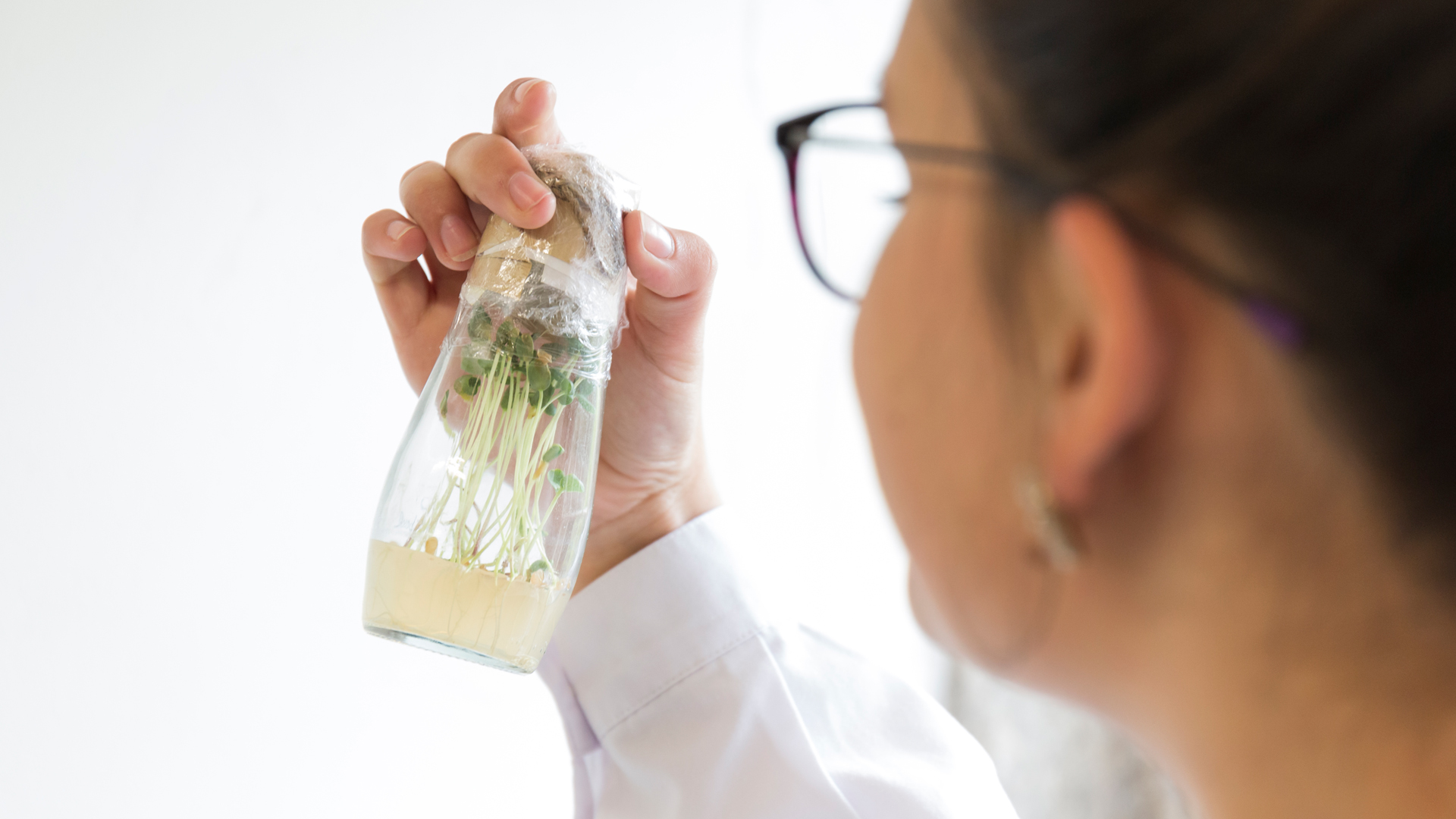
The Bachelor’s Degree Course in Biotechnology at ESA – IPVC is renowned for its hands-on instructional approach and its strong emphasis on career-oriented training, preparing students to be proficient in their field. The programme ensures they have the skills to contribute to technological advancements in the areas of agricultural, food, environmental, industrial and health biotechnology.
In the area of Agricultural Biotechnology, the programme equips students to:
- Develop biotechnological applications aimed at producing plant varieties with enhanced characteristics, higher yields, greater tolerance to adverse conditions and resistance to herbicides and pests.
- Engage in the diagnosis of genetic diseases, as well as the development of new vaccines and growth hormones.
- Implement a programme for the micropropagation, mycorrhization and bacterisation of forestry and agricultural species.
- Operate within integrated production, collecting, assessing and producing beneficial organisms for plant production, including biocontrol agents and plant growth promoters.
- Operate in the domain of integrated production.
Within the field of Food Biotechnology, the programme equips students to:
- Identify, select and enhance industrial microorganisms for the production of enzymes, amino acids, antimicrobial agents, compounds contributing to unique organoleptic properties, value-added products and innovative food items, especially in the area of functional foods.
- Refine the production processes of yeast and fermented food products, mastering the mechanisms for biomass and metabolite production.
- Optimise food preservation and transformation techniques.
- Apply molecular techniques for the authentication and traceability of food products.
In the field of Environmental Biotechnology, the programme equips students to:
- Identify and choose microorganisms and plants involved in specific environmental processes.
- Implement and oversee biological wastewater treatment processes, biological solid waste treatments, control of gaseous emissions using biofilters, bioenergy production and bioremediation techniques to minimise pollution in aquatic and terrestrial ecosystems.
- Select biological indicators to assess the condition of ecosystems.
- Design technological processes aimed at creating products with reduced environmental impact.
Within the field of Industrial Biotechnology, the programme equips students to:
- Identify and select microorganisms suitable for applications in various biotechnological sectors, namely:
- Biomass production and bioprocessing.
- Biorefineries.
- Producing value-added products from by-products or renewable resources.
- Integrating and applying both chemical and biotechnological processes.
- Manufacturing biofuels.
- Implementing and monitoring biotechnological processes in industries such as pulp and paper, textiles and other industries with a biotechnological foundation.
In the field of Health Biotechnology, the programme equips students to:
- Identify and select microorganisms and plants for the production of biopharmaceuticals.
- Develop processes for the production of biopharmaceuticals and biosimilars.
- Recognise and implement applications of pharmaceutical biotechnology, including recombinant proteins (hormones, blood products, enzymes), gene therapy and nucleic acids.
- Identify and select biomaterials for biomedical applications, assessing their biocompatibility and performance.
Course comisssion
Access
Entrance Exams:
One of the following:
[02] Biology and Geology (B)
[07] Physics and Chemistry (Q)
[16] Mathematics
No. of Vacancies:
26 (subject to change)
Special Admissions
– Portuguese Diplomatic Mission Abroad
– Portuguese Grant Holders Abroad or Civil Servants on an Official Mission Abroad
– Officers of the Portuguese Armed Forces
– PALOP grant holders
– Accredited Foreign Diplomatic Mission in Portugal
– High Performance Sports Practitioners
– East-Timor Citizens
Special Entry Routes
- Over 23s
- Holders of a Technological Specialisation Diploma
- Holders of a Higher Professional Technical Diploma
- Holders of other Higher Education qualifications
- Holders of secondary school dual certification courses and specialised art courses
- Special Entry Route for International Students
Re-entry, Change of Combination/Institution/Course
Goals
Aims
The Bachelor’s Degree Course in Biotechnology at the ESA- IPVC is renowned for its hands-on teaching approach and its strong emphasis on career-oriented training, preparing students to be proficient professionals in their field. The programme ensures they possess the skills to contribute to technological advancements in the agricultural, food and environmental areas.
- In the field of Agricultural Biotechnology, the programme equips students to: • Develop biotechnological applications aimed at producing plant varieties with enhanced characteristics, higher yields, greater tolerance to adverse conditions and resistance to herbicides and pests. • Engage in the diagnosis of genetic diseases, as well as the development of new vaccines and growth hormones. • Implement a programme for the micropropagation, mycorrhization and bacterisation of forestry and agricultural species. • Engage in integrated production, collecting, assessing and producing organisms beneficial for plant production, including biocontrol agents and plant growth promoters. • Engage in integrated production.
- In the field of Food Biotechnology, the programme equips students to: • Identify, select and enhance industrial microorganisms for the production of enzymes, amino acids, antimicrobial agents, compounds contributing to unique organoleptic properties, value-added products and innovative food items, especially in the area of functional foods. • Refine the production processes of yeast and fermented food products, mastering the mechanisms for biomass and metabolite production. • Optimise food preservation and transformation techniques. • Apply molecular techniques for the authentication and traceability of food products.
- In the field of Environmental Biotechnology, the programme equips students to: • Identify and choose microorganisms and plants involved in specific environmental processes. • Implement and oversee biological wastewater treatment processes, biological solid waste treatments, control of gaseous emissions using biofilters, bioenergy production and bioremediation techniques to minimise pollution in aquatic and terrestrial ecosystems. • Select biological indicators to assess the condition of ecosystems. • Design technological processes aimed at creating products with reduced environmental impact.
Professional outcomes
Biotechnology graduates can pursue professional careers in:
- Laboratories for physical, chemical and biological analyses, as well as food and environmental quality control and monitoring.
- Natural parks and reserves and plant nurseries. Municipalities.
- Biotechnology companies and bio industries. Companies involved in the development of industrial enzymes and proteins.
- Companies operating in the agricultural, environmental and food industries.
- Research, development and technology transfer centres.
- Biotechnology consultancy services.
- Business project development.
Study Plan
| Curricular Unit | Area | Type | Contact hours | ECTS | PUC |
|---|---|---|---|---|---|
| Mathematics | MAT | S1 | T:14.00 | TP:32.00 | P:32.00 | 6.00 | Consult |
| Chemistry | FEQ | S1 | T:16.00 | P:48.00 | 6.00 | Consult |
| Biochemistry | CB | S1 | T:16.00 | P:48.00 | 6.00 | Consult |
| Introduction to Biotechnology | CB | S1 | T:16.00 | P:26.00 | S:16.00 | 5.00 | Consult |
| Cellular and Molecular Biology | CB | S1 | T:32.00 | P:48.00 | 7.00 | Consult |
| Microbiology | CB | S2 | T:16.00 | P:48.00 | 6.00 | Consult |
| Classical and Molecular Genetics | CB | S2 | T:30.00 | P:38.00 | S:10.00 | 6.00 | Consult |
| Ecology | CA | S2 | T:16.00 | P:36.00 | O:12.00 | 6.00 | Consult |
| Animal and Plant Physiology | CAV | S2 | T:32.00 | P:48.00 | 6.00 | Consult |
| Laboratórios de Bioprocessos | CB | S2 | P:64.00 | 6.00 | Consult |
- Mathematics
- AreaMAT
- TypeS1
- Contact hoursT:14.00 | TP:32.00 | P:32.00
- ECTS6.00
- PUCConsult
-
- Chemistry
- AreaFEQ
- TypeS1
- Contact hoursT:16.00 | P:48.00
- ECTS6.00
- PUCConsult
-
- Biochemistry
- AreaCB
- TypeS1
- Contact hoursT:16.00 | P:48.00
- ECTS6.00
- PUCConsult
-
- Introduction to Biotechnology
- AreaCB
- TypeS1
- Contact hoursT:16.00 | P:26.00 | S:16.00
- ECTS5.00
- PUCConsult
-
- Cellular and Molecular Biology
- AreaCB
- TypeS1
- Contact hoursT:32.00 | P:48.00
- ECTS7.00
- PUCConsult
-
- Microbiology
- AreaCB
- TypeS2
- Contact hoursT:16.00 | P:48.00
- ECTS6.00
- PUCConsult
-
- Classical and Molecular Genetics
- AreaCB
- TypeS2
- Contact hoursT:30.00 | P:38.00 | S:10.00
- ECTS6.00
- PUCConsult
-
- Ecology
- AreaCA
- TypeS2
- Contact hoursT:16.00 | P:36.00 | O:12.00
- ECTS6.00
- PUCConsult
-
- Animal and Plant Physiology
- AreaCAV
- TypeS2
- Contact hoursT:32.00 | P:48.00
- ECTS6.00
- PUCConsult
-
- Laboratórios de Bioprocessos
- AreaCB
- TypeS2
- Contact hoursP:64.00
- ECTS6.00
- PUCConsult
-
| Curricular Unit | Area | Type | Contact hours | ECTS | PUC |
|---|---|---|---|---|---|
| Statistics and Experimental Design | MAT | S1 | TP:16.00 | P:48.00 | 6.00 | Consult |
| Economics and Management | OLM | S1 | T:16.00 | TP:42.00 | S:6.00 | 6.00 | Consult |
| Genetic engineering | CB | S1 | T:16.00 | P:48.00 | S:5.00 | O:5.00 | 6.00 | Consult |
| Enzyme Technology | CB | S1 | T:16.00 | P:48.00 | 5.00 | Consult |
| Cultura de Células e Tecidos | CAV | S1 | T:16.00 | P:64.00 | O:8.00 | 7.00 | Consult |
| Agricultural Biotechnology | CAV | S2 | T:16.00 | P:48.00 | O:8.00 | 6.00 | Consult |
| Processes Modelling | CA | S2 | T:16.00 | PL:52.00 | O:5.00 | 6.00 | Consult |
| Separation Processes | CA | S2 | T:16.00 | P:52.00 | S:5.00 | 6.00 | Consult |
| Microbiologia Aplicada | CB | S2 | T:16.00 | P:48.00 | 6.00 | Consult |
| Biological Resources Management | CB | S2 | T:16.00 | P:26.00 | S:6.00 | O:16.00 | 6.00 | Consult |
- Statistics and Experimental Design
- AreaMAT
- TypeS1
- Contact hoursTP:16.00 | P:48.00
- ECTS6.00
- PUCConsult
-
- Economics and Management
- AreaOLM
- TypeS1
- Contact hoursT:16.00 | TP:42.00 | S:6.00
- ECTS6.00
- PUCConsult
-
- Genetic engineering
- AreaCB
- TypeS1
- Contact hoursT:16.00 | P:48.00 | S:5.00 | O:5.00
- ECTS6.00
- PUCConsult
-
- Enzyme Technology
- AreaCB
- TypeS1
- Contact hoursT:16.00 | P:48.00
- ECTS5.00
- PUCConsult
-
- Cultura de Células e Tecidos
- AreaCAV
- TypeS1
- Contact hoursT:16.00 | P:64.00 | O:8.00
- ECTS7.00
- PUCConsult
-
- Agricultural Biotechnology
- AreaCAV
- TypeS2
- Contact hoursT:16.00 | P:48.00 | O:8.00
- ECTS6.00
- PUCConsult
-
- Processes Modelling
- AreaCA
- TypeS2
- Contact hoursT:16.00 | PL:52.00 | O:5.00
- ECTS6.00
- PUCConsult
-
- Separation Processes
- AreaCA
- TypeS2
- Contact hoursT:16.00 | P:52.00 | S:5.00
- ECTS6.00
- PUCConsult
-
- Microbiologia Aplicada
- AreaCB
- TypeS2
- Contact hoursT:16.00 | P:48.00
- ECTS6.00
- PUCConsult
-
- Biological Resources Management
- AreaCB
- TypeS2
- Contact hoursT:16.00 | P:26.00 | S:6.00 | O:16.00
- ECTS6.00
- PUCConsult
-
| Curricular Unit | Area | Type | Contact hours | ECTS | PUC |
|---|---|---|---|---|---|
| Environmental Biotechnology | CA | S1 | T:30.00 | P:98.00 | S:4.00 | O:5.00 | 12.00 | Consult |
| Integrated Project | CA | S1 | P:48.00 | 6.00 | Consult |
| Food Biotechnology | CB | S1 | T:30.00 | P:98.00 | S:4.00 | O:5.00 | 12.00 | Consult |
| Food Safety | CAV | S2 | T:16.00 | P:48.00 | S:8.00 | 6.00 | Consult |
| Aplicações Biomédicas e Farmacêuticas | ENF | S2 | T:16.00 | P:42.00 | S:6.00 | 6.00 | Consult |
| Industrial biotechnology | CB | S2 | T:16.00 | P:42.00 | S:6.00 | 6.00 | Consult |
| Training and Individual Project | CB | S2 | E:324.00 | 12.00 | Consult |
- Environmental Biotechnology
- AreaCA
- TypeS1
- Contact hoursT:30.00 | P:98.00 | S:4.00 | O:5.00
- ECTS12.00
- PUCConsult
-
- Integrated Project
- AreaCA
- TypeS1
- Contact hoursP:48.00
- ECTS6.00
- PUCConsult
-
- Food Biotechnology
- AreaCB
- TypeS1
- Contact hoursT:30.00 | P:98.00 | S:4.00 | O:5.00
- ECTS12.00
- PUCConsult
-
- Food Safety
- AreaCAV
- TypeS2
- Contact hoursT:16.00 | P:48.00 | S:8.00
- ECTS6.00
- PUCConsult
-
- Aplicações Biomédicas e Farmacêuticas
- AreaENF
- TypeS2
- Contact hoursT:16.00 | P:42.00 | S:6.00
- ECTS6.00
- PUCConsult
-
- Industrial biotechnology
- AreaCB
- TypeS2
- Contact hoursT:16.00 | P:42.00 | S:6.00
- ECTS6.00
- PUCConsult
-
- Training and Individual Project
- AreaCB
- TypeS2
- Contact hoursE:324.00
- ECTS12.00
- PUCConsult
-
Employability
91%
More information at: http://infocursos.mec.pt/dges.asp?code=3161&codc=9016
Partnerships and internships
Partner Institutions in the Scope of Erasmus+ Mobility Programmes:
- IRTA
- Research institute owned by the Government of Catalonia and attached to the Department of Agriculture
- Thomas More Kempen
- University of Leon
- University of Seville
- University of Seville
- Polytechnic University of Valencia – ETSMRE
- Università Degli Studi Della Tuscia
- Università Degli Studi di Napoli Federico II
- Università Degli Studi Di Teramo
- Warsaw University of Technology
- Wroclaw University of Environmental and Life Sciences
National Partnerships:
- A Licentivos – Apoio à Indústria, Comércio e Turismo, Lda.
- Adega Cooperativa de Ponte de Lima
- Águas do Norte, S.A
- AQUALGAE
- Aromáticas Vivas, Lda.
- Associação Interprofissional de Horticultura do Oeste
- Associação Território com Vida
- Biodiversus
- Braga City Council
- CeNIIVC – Centro de Nanotecnologia e Materiais Técnicos, Funcionais e Inteligentes
- Centre of Biological Engineering of the University of Minho
- Waste Recycling and Recovery Centre
- Centro Hospitalar do Porto
- CIIMAR
- CITEVE- Indústria Têxtil e do Vestuário
- Cosmetic Lab & Consulting
- School of Biotechnology of the Portuguese Catholic University
- Faculty of Engineering of the University of Porto
- Faculty of Pharmacy of the University of Porto
- Frulact
- 3Bs Research Group of the University of Minho
- Grupo Unicer
- InBioSide
- National Institute of Agricultural and Veterinary Research – Vairão
- School of Agriculture of the Technical University of Lisbon
- IRTA – Catalonia
- Labmed – Formação e Serviços, Lda.
- Laboratório de Análises Clínicas, S.A (S. Lázaro)
- Barcelos Municipality
- Paredes de Coura Municipality
- NatureBee Unipessoal, Lda.
- Nutricampo – Pesquisa e Inovação Lda.
- Oliófora
- Pimenta do Vale Laboratórios, Lda.
- Quinta do Minho – Agricultura e Turismo SA
- SEGALAB
- SILLIKER PORTUGAL
- University of Porto
- Unidade de Saúde do Alto Minho, EPE
- University of Trás-os-Montes and Alto Douro
- University of Vigo
- Weproductise
Other information
Course Prizes
- Prize for the ideas competition on the ECOSAN project, funded by the Environmental Fund, first place went to Mariana Costa, with a Bachelor’s Degree in Biotechnology, and there were two honourable mentions, Catarina Costa and Rita Castanheira, both on the Bachelor’s Degree Course in Biotechnology at ESA-IPVC (2019).
Projects
- GreenHealth Project – Digital and biological asset-based strategies to enhance well-being and promote green health– Leader – IPB (NORTH-01-0145-ERDF-000042)– LI.2 Sustainable production and biological-based strategies. (2020-2023)
- Project TECH-Tecnologia, Ambiente, Criatividade e Saúde – NORTE 2020 – APNOR SAICT – ENVIRONMENT TECH – Activity 3.2 – Systems for instrument innovation in the circular economy. (2020-2023)
- Project TECH-Tecnologia, Ambiente, Criatividade e Saúde – NORTE 2020 – APNOR SAICT – AVITECH – Activity 2.3 – A digital platform for bringing together producers, restaurants, and consumers of Portuguese Poultry Breeds. (2020-2023)
- R&D Mobilising Project “BIOma – Integrated Bio-economy solutions for the Mobilisation of the Agrifood chain” (POCI -01-0247-ERDF-046112), co-financed by the European Regional Development Fund (ERDF), through the Operational Programme for Competitiveness and Internationalisation (POCI). (2020-2023) (PPS3, PPS4)
- ECOSAN Project – Comprehensive Ecological Sanitation, funded by the Environmental Fund of the Ministry of the Environment, in association with CIIMAR, Bluemater, SA and the Sustainable Construction Portal (BonGreen company), 2018 – 2019.
- SUZUKII – OPERATIONAL TOOL TO IMPROVE BLUEBERRY PRODUCTION AND FIGHT DAMAGE CAUSED BY DROSOPHILA SUZUKII. European Commission – ERDF GRANT_NUMBER: Co-Promotion No. 40734, Jan 2021 to Dec 2023|
- Technical Model for Intensive Frog Farming – Rana perezi. European Commission – FEAMP. GRANT_NUMBER: PO MAR2020 – AQC/INV – Proj. 16/02/01-FMO-0087, Oct 2017 to Jun 2021
- LEVAM Project – Native yeast in the Alvarinho grape variety in the sub-region of Monção and Melgaço, with internal funding in the scope of the UI-CISAS- Center for Research and Development in Agrifood Systems and Sustainability, September 2018 to April 2019.
- CrithmumVAL Project- Characterisation and evaluation of the nutritional and functional potential of Crithmum maritimum, with internal funding under the scope of UI-CISAS- Center for Research and Development in Agrifood Systems and Sustainability, September 2018 to March 2019.
- WAW Project – Waste Around the Wine – Circular Economy in the Wine Industry, promoted by AMOG, in partnership with ESA-IPVC; Portugal 2020, COMPETE 2020; Co-promotion projects; Collective Activities, POCI-02-0853-ERDF-017113.
- Project for the Revitalisation of traditional production sectors at PNPG – RevitAGRI-PNPG – Northern Portugal Regional Operational Programme – Transfer of Scientific and Technological Knowledge, Qualification. Priority Axis 1.
- NORTH‐08‐0569‐ERDF‐000038 Project: GRANITE OF THE STONES OF PONTE DE LIMA, Action 3, EEC PROVERE Minho IN – Anchor Projects – Programmes for the economic enhancement of endogenous resources (2009‐2015), during the period (ongoing process – monitoring during consultation with entities).
- EuropeAid/135776/DD/ACT/GW Project – Kópóti pa cudji nô futuro” – Agriculture, Health and Development, coordinated by the NGO VIDA – International Volunteering for African Development. Member of the IPVC team – Associated Institution, 2015 – 2017.
- POCI-01-145-ERDF-01661 & PTDC/AGR-PRO/3438/2014 Projects. COCOON: Combined sustainable strategies for the management of root-knot nematodes in protected cultivation. Funded by the budget(s) of the Operational Programme for Competitiveness and Internationalisation [POCI], ERDF component and by the budget of the Fundação para a Ciência e a Tecnologia in its OE component. Coimbra University and Polytechnic University of Viana do Castelo, 2016/07/01 to 2019/06/30.
- Project: Diversity of local pig breeds and production systems for high quality traditional products and sustainable pork chains. Horizon 2020: Proposal: 634476-2 – TREASURE – H2020-SFS-2014-2: 2015-2018: 1 April 2015 to 31 March 2019.
- Terra@ENO Project – Terroir and agro-ecological zoning as a critical factor for competitiveness and innovation of “Vinho Verde” wines. North-02-0853-ERDF-000113. 2017 – 2019.
- PARRA Project (Integrated platform for monitoring and assessment of flavescence dorée disease in grapevines). Co-promotion, Portugal2020. Incentive Scheme for Research and Technological Development (2015-2018).
- Project: Combined sustainable strategies for root-knot nematode management in protected crops. PTDC/AGR-PRO/3438/2014 (2016-2019).
- Project: COMPETE-FCT UID/AGR/04033/2013 of CITAB-UTAD, from 2015/01/01 to 2017/12/31.
- EMER-N – Rural Entrepreneurship in the Northern Region – NORTE-51-2015-04 – Entrepreneurship.
- Hand on Vespa – Working group for assessing regional scale environmental risks and best guidance practices in controlling and preventing the spread of exotic Vespa velutina in Northern Portugal. POSEUR – 15-2015 -11 – Operational Programme for Sustainability and Efficient Use of Resources – Nature Conservation Actions.
Projects
Research Projects
- GreenHealth Project – Digital and biological asset-based strategies to enhance well-being and promote green health– Leader – IPB (NORTE-01-0145-ERDF-000042)– LI.2 Sustainable production and biological-based strategies:
- Telma Araújo, “Assessment of antimicrobial activity and antioxidant activity in Amalenchier ovalis, Sorbus aucuparia, Rubus ulmifolius and Crataegus monogyna berries”, in the scope of the 2021/2022 Internship and Individual Project curricular unit.
- Project TECH-Tecnologia, Ambiente, Criatividade e Saúde – NORTE 2020 – APNOR SAICT – ENVIRONMENT TECH – Activity 3.2 – Systems for instrument innovation in the circular economy. (2020-2023):
- Ana Sofia Gonçalves,” Assessment of the potential for biochar production from agro-forestry waste”, in the scope of the Internship and Individual Project curricular unit (2020/2021).
- Ricardo Ferreira, “Optimisation of the condensed tannin extraction process from Acácia sp. bark according to green chemistry guidelines”, in the scope of the Internship and Individual Project curricular unit (2020/2021).
- Inês Esteves and Telma Araújo, “Production of biochar from vine pruning and assessment of its potential for use as a fertiliser and low-cost adsorbent for water treatment”, in the scope of the Internship and Individual Project curricular unit (2021/2022).
- Ana Senra and Bárbara Silva, “Ultrasonic treatment for increased yield in tannin extraction from Acacia sp bark” in the scope of the Internship and Individual Project curricular unit (2021/2022).
- Tiago Florindo, “Valorisation of residual Biomass in the wine Sector: Creation of value chains for vine pruning from a rural development and circular bioeconomy perspective”, in the scope of the Integrated Project curricular unit (2021/2022).
- Patricia Fonte, Ricardo Ferreira, Vitor Costa and Viviana Oliveira, “Circular economy in the agrifood and agroforestry sectors: studies of valorisation of wine residue and forest biomass for the development of new products”, in the scope of Integrated Project curricular unit (2020/2021).
- Ana Sofia Gonçalves, Cláudia Campos and Telma Freitas, “Biochar production from vineyard waste: characterisation and potential use for soil amendment and phosphorous adsorption”, in the scope of the Integrated Project curricular unit (2020/2021).
- Márcio Meira and Hugo Fernandes, “Valorisation of wine residue by biochar production: evaluation of its application as a soil fertiliser and as adsorbent”, in the scope of the Integrated Project curricular unit (2019/2020).
- R&D Mobilising Project “BIOma – Integrated Bio-economy solutions for the Mobilisation of the Agrifood chain” (POCI -01-0247-ERDF-046112), co-financed by the European Regional Development Fund (ERDF), through the Operational Programme for Competitiveness and Internationalisation (POCI). (2020-2023) (PPS3, PPS4)
- – Rafael Lopez, “Characterisation of the by-products of wine produced by different Portuguese grape varieties”, in the scope of the Internship and Individual Project curricular unit (2020/2021).
- Patricia Fonte, Ricardo Ferreira, Vitor Costa and Viviana Oliveira, “Circular economy in the agrifood and agroforestry sectors: studies on valorisation of wine residue and forest biomass for the development of new products”, in the scope of the Integrated Project curricular unit (2020/2021).
- Bruna Martins, Fábio Silva and Rui Oliveira, “Composting animal manure with pruning clippings and grape stalks”, in the scope of the Integrated Project curricular unit (2020/2021)
- Cláudia Barros and Cláudia Ribeiro, “Sustainable Solutions for Valorisation of Waste and By-Products from the Wine Industry: Procedures for the Extraction and Refining of Bioactive Ingredients”, in the scope of the Integrated Project curricular unit (2021/2022).
- Inês Alves, “Contributions to the circular economy in the agro-industrial sector: development of value-added products from winery waste”, in the scope of the Internship and Individual Project curricular unit (2019/2020).
- SEIVA PROJECT – Energy Systems and Green Infrastructures for Agriculture, Environmental Fund (Notice No 6700/2021 Supporting a new environmental culture, within the scope of ENEA 2020 — Sustainable Production and Consumption, in partnership with CIIMAR-UP, ANCV – Associação Nacional de Coberturas Verdes and WeProductise, 2021 – 2022.
- – Francisca Puga, “Assessment of the potential for bioelectricity production in microbial fuel cells with plants using pennyroyal and mint chocolate”, in the scope of the Internship and Individual Project curricular unit 2021/2022.
- Project: Technical Model for Intensive Frog Farming – Rana perezi. European Commission – FEAMP. GRANT_NUMBER: PO MAR2020 – AQC/INV – Proj. 16/02/01-FMO-0087, Oct 2017 to Jun 2021
- Francisca Puga and Rita Marques, “Extraction and purification of insect oils and defatted flours – valorisation as an ingredient”, in the scope of the Integrated Project curricular unit (2021/2022).
- Bruna Ribeiro, Cátia Ferreira and Mariana Lopes, “Evaluation of the production potential of oil and protein concentrate in different insect species”, in the scope of the Integrated Project curricular unit (2020/2021).
- GesPSA Kiwi Project – Operational tool for sustainable management of the bacterial canker (Psa) of Actinidia – NORTH-01-0247-ERDF033647″, funded by the European Regional Development Fund (ERDF) through the Northern Portugal Regional Operational Programme (2019-2021).
- Rafaela Monte, “Characterisation of Pseudomonas syringae pv. actinidia and the use of phages to control bacterial canker in Actinidia”, in the scope of the Internship and Individual Project curricular unit (2020/2021).
- BioPest Project – Integrated strategies to control key pests in nut species. PDR2020-101-030960 Project. PDR 2020-Rural Development Programme, 2019-2021:
- Aida Mano, “Use of Beauveria bassiana fungus as a means to combat the chestnut tortrix moth, Cydia splendana”, in the scope of the Internship and Individual Project curricular unit (2020/2021)
- WAW Project – Waste Around the Wine – Circular Economy in the Wine Industry, promoted by AMOG, in partnership with ESA-IPVC; Portugal 2020, COMPETE 2020; Co-promotion projects; Collective Activities, POCI-02-0853-ERDF-017113.
- Inês Alves, Gabriela Cunha and Sara Ferreira, “Waste4fungi&Bioactivecompounds – Waste recycling for controlled mushroom production and extraction of bioactive compounds”, in the scope of the Integrated Project curricular unit (2019/2020).
- Eduarda Ribeiro and Emanuel Serra, “Winery waste valorisation for controlled production of mushrooms and extraction of bioactive compounds”, in the scope of the Integrated Project curricular unit (2018/2019).
- Tiago Martins and João Teixeira, “Composting bovine manure with wheat straw, maize straw or grape stalks”, in the scope of the Integrated Project curricular unit (2018/2019).
- TERR@ALVA- Definition and influence of Terroirs on the quality of Alvarinho wine (POCI-01-0145-ERDF-024328) (2017-2020).
- Luis Alves and Rafaela Monte, “Determination of CLPP in the Alvarinho region’s wine production areas: comparison of organic and CW production mode”, in the scope of the Integrated Project curricular unit (2019/2020).
- João Barbosa and Mariana Costa, “Determination of CLPP (Community Level 2 Physiological Profile) in areas of vineyard”, in the scope of Integrated Project curricular unit (2018/2019).
- LEVAM Project – Native yeast in the Alvarinho grape variety in the sub-region of Monção and Melgaço, with internal funding within the scope of the UI-CISAS- Center for Research and Development in Agrifood Systems and Sustainability, September 2018 to April 2019.
- Luis Alves and Rafaela Monte, “Determination of CLPP in the Alvarinho region’s wine production areas: comparison of organic and CW production mode”, in the scope of the Integrated Project curricular unit (2019/2020).
- CrithmumVAL Project- Characterisation and evaluation of the nutritional and functional potential of Crithmum maritimum, with internal funding under the scope of UI-CISAS- Center for Research and Development in Agrifood Systems and Sustainability, 2018-2019.
- Beatriz Marques, “Phytochemical characterisation and the antioxidant activity of Crithmum maritimum plant extracts”, in the scope of the Internship and Individual Project curricular unit (2019/2020).
- Beatriz Marques and Rita Castanheira, “In vitro micropropagation and study of the antimicrobial activity of the essential oils of Crithmum maritimum L. on the Northern Coast of Portugal”, in the scope of the Internship and Individual Project curricular unit (2019/2020).
(Português)
- Projeto GreenHealth – Estratégias digitais e baseadas em ativos biológicos para melhorar o bem-estar e promover a saúde verde – Líder – IPB (NORTE-01-0145-FEDER-000042) – LI.2 Produção sustentável e estratégias de base biológica (2020-2023):
- Telma Araújo, “Avaliação da atividade antimicrobiana e atividade antioxidante de extratos de bagas de Amelenchier ovalis, de Sorbus aucuparia, Rubus ulmifolius e de Crataegus monogyna”, no âmbito da UC Estágio e Projeto Individual 2021/2022
- Projeto TECH-Tecnologia, Ambiente, Criatividade e Saúde – NORTE 2020 – APNOR SAICT – ENVIRONMENT TECH – Activity 3.2 – Systems for instrument innovation in the circular economy. (2020-2023):
- Ana Sofia Gonçalves,” Avaliação do potencial de produção de biochar a partir de resíduos agroflorestais “, no âmbito da UC Estágio e Projeto Individual (2020/2021);
- Ricardo Ferreira, “Otimização do processo de extração de taninos condensados de cascas de Acácia sp. mediante as diretrizes da química verde”, no âmbito da UC Estágio e Projeto Individual (2020/2021);
- Inês Esteves e Telma Araújo, “Production of biochar from vine prunings and assessment of its potential for use as a fertiliser and low cost adsorbent for water treatment”, no âmbito da UC Projeto Integrado (2021/2022)
- Ana Senra e Bárbara Silva, “Ultrasonic treatment for increased yield in tannin extraction from Acacia sp bark” no âmbito da UC Projeto Integrado (2021/2022)
- Tiago Florindo, “Valorization of residual Biomass in the wine Sector: Creation of value chains for vine pruning from a rural development and circular bioeconomy perspective”, no âmbito da UC Projeto Integrado (2021/2022)
- Patricia Fonte, Ricardo Ferreira, Vitor Costa e Viviana Oliveira, “Circular economy in the agri-food and agro-forestry sectors: studies of valorization of wine residues and forest biomass for the development of new products”, no âmbito da UC Projeto Integrado (2020/2021).
- Ana Sofia Gonçalves, Cláudia Campos e Telma Freitas, “Biochar production from vineyard waste: caracterization and potecial use as soil amendment and phosphorous adsorvent”, no âmbito da UC Projeto Integrado (2020/2021)
- Márcio Meira e Hugo Fernandes, “Valorization of wine residues by biochar production: evaluation of its application as a soil fertilizer and as adsorbent”, no âmbito da UC Projeto Integrado (2019/2020)
- Projeto mobilizador de I&DT “BIOma – Soluções integradas de BIOeconomia para a Mobilização da cadeia Agroalimentar” (POCI -01-0247-FEDER-046112), co-financiado pelo Fundo Europeu de Desenvolvimento Regional (FEDER), através do Programa Operacional Competitividade e Internacionalização (POCI). (2020-2023) (PPS3, PPS4)
- – Rafael Lopez, “Caraterização de subprodutos vitivinícolas provenientes de diferentes castas portuguesas”, no âmbito da UC Estágio e Projeto Individual (2020/2021);
- Patricia Fonte, Ricardo Ferreira, Vitor Costa e Viviana Oliveira, “Circular economy in the agri-food and agro-forestry sectors: studies of valorization of wine residues and forest biomass for the development of new products”, no âmbito da UC Projeto Integrado (2020/2021)
- Bruna Martins, Fábio Silva e Rui Oliveira, “Composting animal manure with pruning chippings and grape stalks”, no âmbito da UC Projeto Integrado (2020/2021)
- Cláudia Barros e Cláudia Ribeiro, “Sustainable Solutions for Valorisation Of Waste And By-Products From Wine Industry: Procedures For Extraction And Refining Of Bioactive Ingredients”, no âmbito da UC Projeto Integrado (2021/2022).
- Inês Alves, “Contributos para a economia circular no setor agroindustrial: desenvolvimento de produtos de valor acrescentado a partir de resíduos vitivinícolas”, no âmbito da UC Estágio e Projeto Individual (2019/2020).
- PROJETO SEIVA – Sistemas Energéticos e Infraestruturas Verdes para Agricultura, financiado pelo Fundo Ambiental (Aviso n.º 6700/2021. Apoiar uma nova cultura ambiental, no âmbito da ENEA 2020 — Produção e Consumo Sustentáveis), em parceria com CIIMAR-UP, ANCV – Associação Nacional de Coberturas Verdes e WeProductise, 2021 – 2022.
- – Francisca Puga, “Avaliação do potencial de produção de bioeletricidade em células de combustível microbianas com plantas usando poejo e menta-chocolate”, no âmbito da UC Estágio e Projeto Individual 2021/2022.
- Projeto “Modelo Técnico para Produção Intensiva de Rãs – Rana perezi”. European Commission – FEAMP. GRANT_NUMBER: PO MAR2020 – AQC/INV – Proj. 16-02-01-FMO-0087, 2017-10 a 2021-06
- Francisca Puga e Rita Marques, “Extraction and purification of insect oils and defatted flours – valorization as an ingredient”, no âmbito da UC Projeto Integrado (2021/2022).
- Bruna Ribeiro, Cátia Ferreira e Mariana Lopes, “Evaluation of the production potential of oil and protein concentrate in different insect species”, no âmbito da UC Projeto Integrado (2020/2021).
- Projeto GesPSA Kiwi – Ferramenta Operacional para gestão sustentável do cancro bacteriano (Psa) da Actinídea – NORTE-01-0247-FEDER033647″, financiado pelo Fundo Europeu de Desenvolvimento Regional (FEDER) através do Programa Operacional Regional do Norte (2019-2021).
- Rafaela Monte, “Caracterização de Pseudomonas syringae pv. actinidia e utilização de fagos no controlo da doença do cancro bacteriano da Actinidia”, no âmbito da UC Estágio e Projeto Individual (2020/2021).
- Projeto “BioPest- Estratégias integradas de luta contra pragas-chave em espécies de frutos secos” Projeto PDR2020-101-030960. PDR 2020-Programa de Desenvolvimento Rural, 2019-2021:
- Aida Mano, “Utilização do fungo Beauveria bassiana como meio de luta contra o bichado da castanha, Cydia splendana”, no âmbito da UC Estágio e Projeto Individual (2020/2021)
- Projeto WAW – Waste Around the Wine – Economia Circular no Setor Vinícola, promovido pela AMOG, em parceria com a ESA-IPVC; Portugal 2020, COMPETE 2020; Projetos em co-promoção; Atividades Coletivas, POCI-02-0853-FEDER-017113.
- Inês Alves, Gabriela Cunha e Sara Ferreira, “Waste4fungi&Bioactivecompounds – Waste recycling for controlled mushroom production and extraction of bioactive compounds”, no âmbito da UC Projeto Integrado (2019/2020)
- Eduarda Ribeiro e Emanuel Serra, “Winery waste valorization for a controlled production of mushrooms and extraction of bioactive compounds”, no âmbito da UC Projeto Integrado (2018/2019)
- Tiago Martins e João Teixeira, “Composting bovine manure with wheat straw, maize straw or grape stalks”, no âmbito da UC Projeto Integrado (2018/2019)
- TERR@ALVA- Definition and influence of Terroir in quality of Alvarinho wine (POCI-01-0145-FEDER-024328) (2017-2020).
- Luis Alves e Rafaela Monte, “Determination of CLPP in the Alvarinho region’s wine culture areas: comparison of organic and CW production mode”, no âmbito da UC Projeto Integrado (2019/2020).
- João Barbosa e Mariana Costa, “Determination of CLPP (Community Level 2 Physiological Profile) in areas of vineyard”, no âmbito da UC Projeto Integrado (2018/2019).
- Projeto LEVAM – Leveduras autóctones na casta Alvarinho na sub-região de Monção e Melgaço, com financiamento internoo no âmbito da UI-CISAS- Center for Research and Development in Agrifood Systems and Sustainability, setemrbro 2018 a abril 2019.
- Luis Alves e Rafaela Monte, “Determination of CLPP in the Alvarinho region’s wine culture areas: comparison of organic and CW production mode”, no âmbito da UC Projeto Integrado (2019/2020).
- Projeto CrithmumVAL- Caraterização e avaliação do potencial nutricional e funcional e Crithmum maritimum, com financiamento interno no âmbito da UI-CISAS- Center for Research and Development in Agrifood Systems and Sustainability, 2018-2019.
- Beatriz Marques, “Caracterização fitoquímica e atividade antioxidante de extratos de plantas de Crithmum maritimum”, no âmbito da UC Estágio e Projeto Individual (2019/2020).
- Beatriz Marques e Rita Castanheira, “In vitro micropropagation and study of the antimicrobial activity of the essential oils of Crithmum maritimum L. of Northern Coast of Portugal”, no âmbito da UC Projeto Integrado (2019/2020).
Partner Institutions in the Scope of Erasmus+ Mobility Programmes:
- IRTA – Institute of AgriFood Research and Technology – Catalonia, Spain
- Thomas More Kempen
- Universidad de Leon
- University of Sevilla
- University of Sevilla
- Polytechnic University of Valencia – ETSMRE
- Università Degli Studi Della Tuscia
- Università Degli Studi di Napoli Federico II
- Università Degli Studi Di Teramo
- Warsaw University of Technology
- Wroclaw University of Environmental and Life Sciences
Sorry, this entry is only available in Português.
“Sem dúvida uma experiência enriquecedora que me permitiu alcançar a excelência através da combinação do espírito de entreajuda, com a exigência a que os professores me habituaram. Destaco a forte componente prática a juntar ao leque de ferramentas e conhecimentos que adquiri ao longo da licenciatura, bem como a oportunidade de complementar disciplinas na área médica, através do programa Erasmus na Universidade de Nápoles Federico II, Itália. Fui cofundador de uma iniciativa empresarial durante a Licenciatura e da parte do IPVC e dos professores sempre encontrei apoio e dinamismo em fomentar o meu lado mais empreendedor. Atualmente, Doutorado em Medicina Regenerativa, sou cofundador e administrador de uma empresa na área dos dispositivos médicos, HydrUStent SA, e Gestor de Inovação e Propriedade Intelectual no grupo de investigação 3Bs, Universidade do Minho.”
Acreditação e registo
- Com Acreditação em 2016, por 6 anos |
- Limite de admissões fixado: 39
- Registo inicial: R/A-Ef 664/2011 de 18-03-2011
- Registos de alteração: R/A-Ef 664/2011/AL01 de 20-04-2016
Mais informação em Agência de Avaliação e Acreditação do Ensino Superior-A3ES: https://www.a3es.pt/pt/resultados-acreditacao/biotecnologia-36
Informação Geral
- 180 ECTS |
- 6 Semestres |
- CNAEF 524 Tecnologia dos processos químicos |
- Código: 9016
- Grau atribuído: Licenciado
CookiesPolicy
Setting cookiesAccept